How Product Designers Can Make the Most of Side Projects
Why I do side projects as a product designer, how to set a topic, goals, and an MVP, and what I learned from an RSS service and a blog built with Framer.
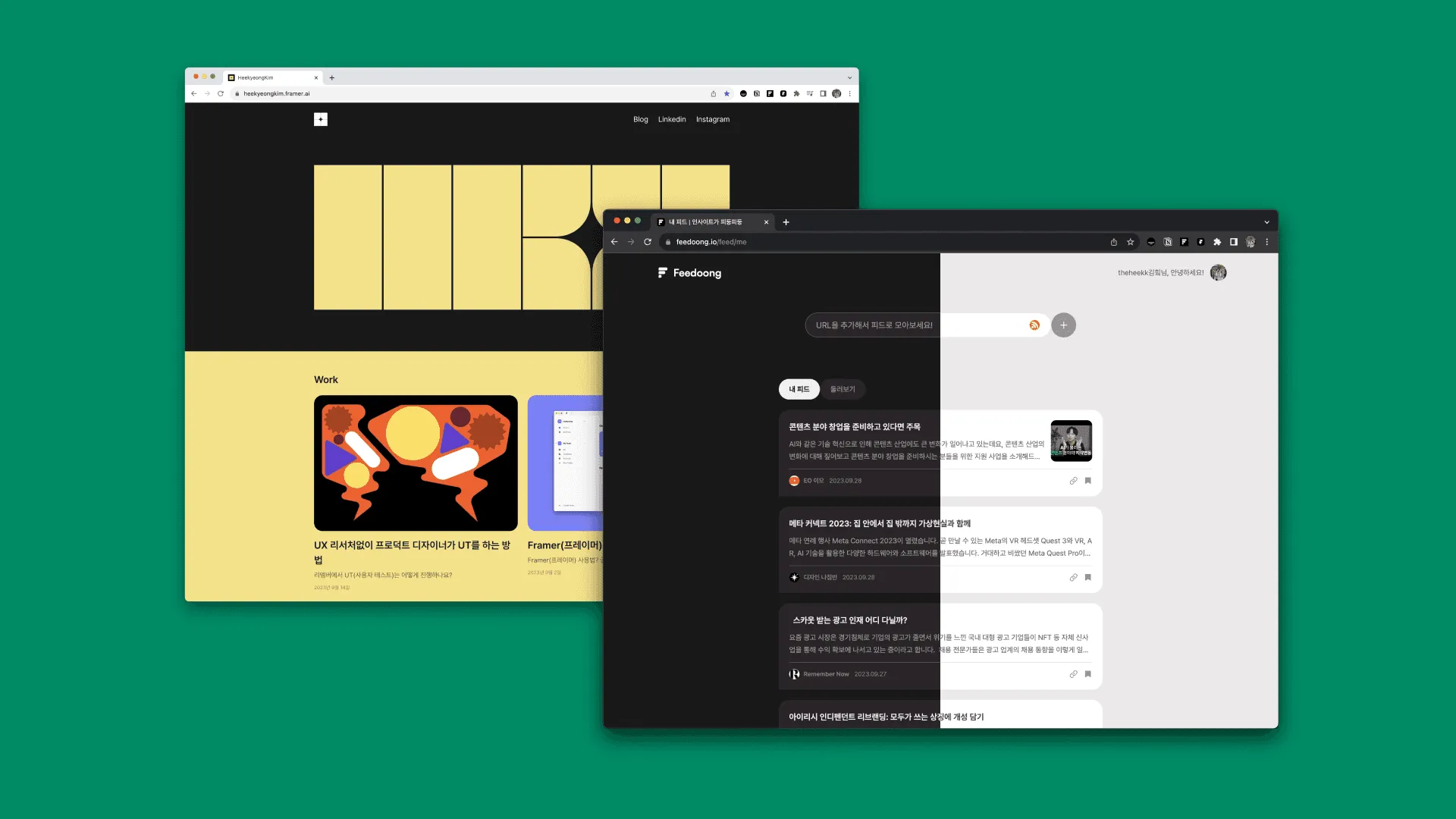
My team once held a session on the theme “Share what has helped you grow as a designer, and let’s grow together!” When I thought about what had helped me grow in the first half of the year, I realized side projects had made a real difference, so I gave a talk on how side projects affect your day job. This post is that talk, with some more of my side project experience added.
In short, side projects are a great way to try things that are hard to try at your day job, and then bring that experience back to work. In this post, I cover how to set a topic, goals, and an MVP, and share two of my own projects: Feedoong, an RSS service, and a blog built with Framer.
What is a side project?
A side project, sometimes called a toy project, is an activity outside your day job where you make something for your own growth, enjoyment, or other reasons. People start them for many reasons: for fun, to study and develop themselves, or to earn money or start a business.
Why I do side projects
I do them partly for fun, but mostly to try things I can’t try at my day job. For example, I’ve built a color system my own way, different from the one at my company, and applied it to a product. I’ve also built and run a website to learn a new tool. Side projects serve many purposes for me.
How to run a side project
A side project starts with a purpose, whether that’s turning a flash of inspiration into a real product or making something small at the level of a single feature. You then work out the skills you need to make it real and the people you’ll work with.
Choose a topic
If you have an idea you’ve wanted to make real, or a topic you’ve long been interested in, you can start a project with that as your goal. Your teammates have to connect with the topic for the project to last, so choose a topic everyone can get behind.
Set your purpose and goals
Whether it’s for fun, for your portfolio or learning, or for making money will determine how you spend your time and budget.
Start as small as you can
Set a project goal, define an MVP (Minimum Viable Product) that can achieve it, and then estimate a schedule and scope that will let you finish.
My current side projects
I plan to write about each of these in detail later, but here are the two side projects I’m working on now.
Feedoong, an RSS feed service
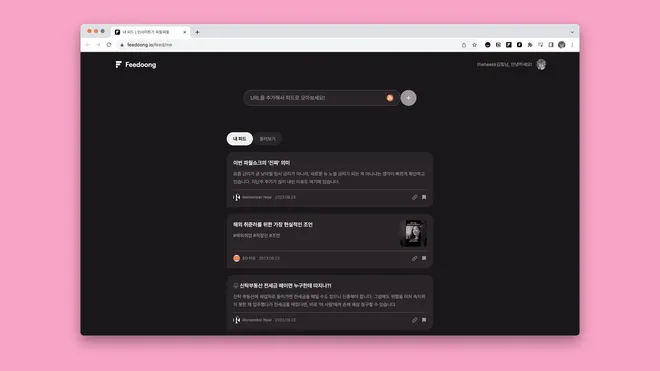
Feedoong (feedoong.io) is a side project that started with the idea of an RSS feed service. Four of us, including web frontend and server developers and me as the product designer, have worked on it in our spare time alongside our day jobs. Because we all have day jobs, building and maintaining it is slow, but we keep improving it, and its number of real users keeps growing.
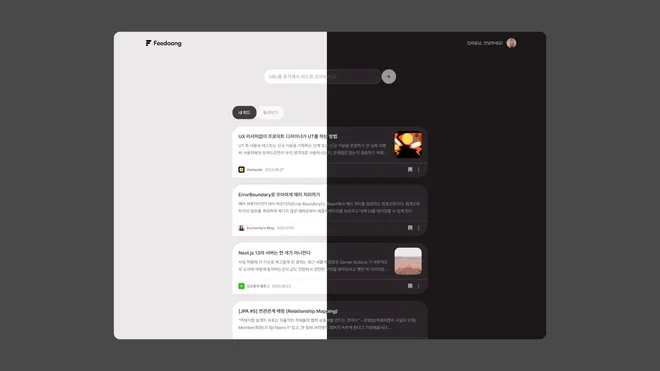
I was responsible for all of the product design on this project, which let me try many things I couldn’t try at work. Adding light and dark modes along with a semantic color system was especially meaningful. I got to apply a color system I’d only understood in theory to a real product, and I had time to think properly about the most efficient way to organize a design system for maintenance. In the second half of the year, I plan to use this experience to adapt a semantic color system to our products at work.
A blog built with Framer: Heekyeongkim’s Blog
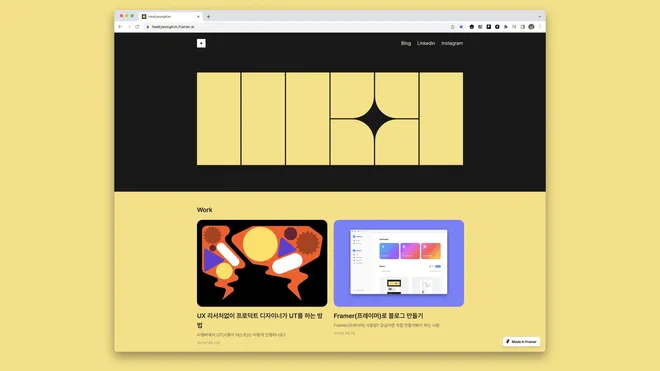
I recently explained why I built a blog with Framer and how it went in a post called “Creating a Blog with Framer” (in Korean). I started this side project because I felt that building an actual service was the surest way to learn a new tool like Framer.
My main reason for building a blog with Framer was to find out how much web frontend effort it could save when making landing pages at the quality we wanted, and the timing happened to match my wish for a personal blog. As a result, I didn’t just learn the design and publishing side of building a site. I also experienced the whole flow of Planning > Design > Build > Operate > Maintain, including writing and managing content in a CMS, setting up SEO, and setting up Analytics and Search Console to check metrics. It let me learn a little about many areas beyond design.
Closing thoughts
I was clear about why I started these side projects and what I wanted to experience, so I plan to apply that experience to my day job. Most side projects run alongside a day job, which makes “success” hard to come by. Many end before they’re finished or without reaching their goals. But even “failure” can leave you with a meaningful experience, and if you can find out why you failed and grow from it, the project is a success in itself. If you’d like to develop yourself through experiences outside your day job, I recommend giving a side project a try.
This post was translated from the original Korean version. Read in Korean